
Trauma & the window of tolerance
What is trauma?
Trauma is commonly understood as the psychological & emotional response to a distressing or disturbing event experienced directly or indirectly.
Trauma is subjective; two people can experience the same event/s and have two very different emotional and psychological responses to it.
Traumatic events can be single incidents, such as a car accident or a natural disaster, or multiple & long-lasting repetitive events, such as childhood neglect or systemic violence.
Symptoms of trauma
Some symptoms of trauma include:
Flashbacks
Nightmares
Avoidance
Flatness or numbness
Loss of pleasure in activities that were previously meaningful
Fear
Anger
Irritability
Guilt
Difficulties sleeping & concentrating
Hypervigilance
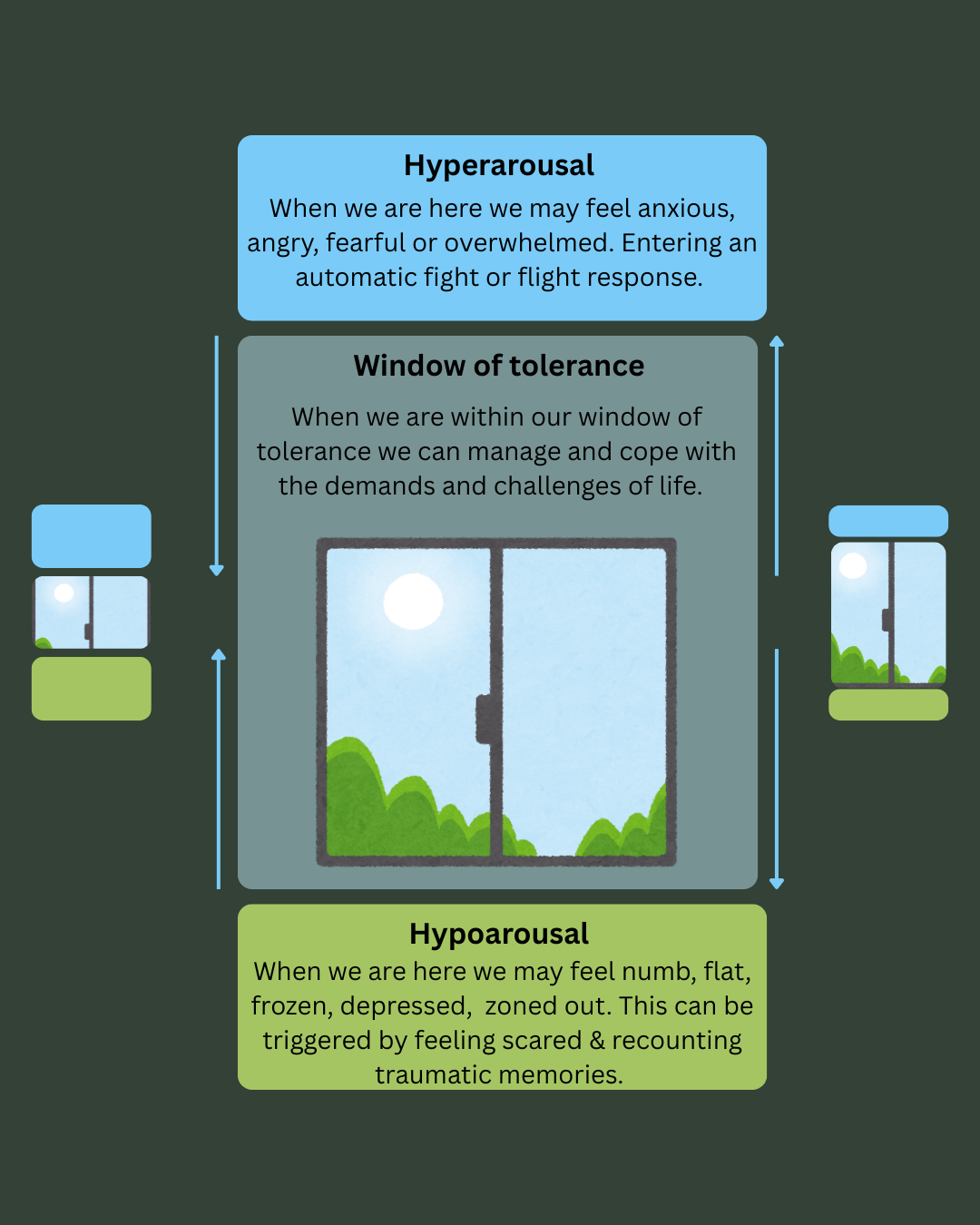
The window of tolerance developed by Dr Dan Siegel
How does trauma affect the window of tolerance?
Experiencing a traumatic event is likely to reduce our window of tolerance, meaning that our brain and bodies capacity to manage the demands and challenges of life shrinks and it is easier to go into hyperarousal or hypoarousal, not because we want to but because this is our body and brains automatic response to try keep us safe.
How therapy can help
Therapy will often focus on:
Identifying triggers that take us outside of our window of tolerance
Developing skills to increase and remain within our window of tolerance, such as breathing exercises, mindfulness, guided imagery, and developing a calm place
Developing self-compassion and self-acceptance to reduce any feelings of guilt and shame associated with the trauma and becoming dysregulated
Understanding and processing traumatic memories that may have narrowed our window of tolerance
